



一部の英単語は、「-ed」や「-ing」を使うかによって、意味が全く変わることがあります。この微妙な違いが混乱を招くこともありますが、ご安心ください。ここでは、その違いを明確にし、理解を助ける例文をご紹介します。日本語には同じようなパターンがないため、日本語話者にとって特に難しいと感じるかもしれません。それでは、このトピックに取り組み、これらの単語をもっと簡単に使えるようになりましょう!英語の形容詞の使い方については、以下をお読みください。
1. 「-ed」と「-ing」とは?
具体例を見る前に、基本的な説明をしましょう。
•-ed: 通常、過去形や過去分詞形で使用されます。形容詞として使われる場合は、誰かの感情を表します。
例: “I was bored.” (退屈していました。)
•-ing: 現在分詞(進行形)として使われたり、感情を引き起こすものを表したりします。
例: “The movie was boring.” (その映画は退屈でした。)
覚え方:
•自分の感情を表す場合は、「-ed」を使います。
•感情を引き起こすものを表す場合は、「-ing」を使います。
2. 10のよくある例
ここでは、「-ed」と「-ing」で意味が大きく変わる10組の単語を紹介します。例文をよく見て、違いを確認してください。
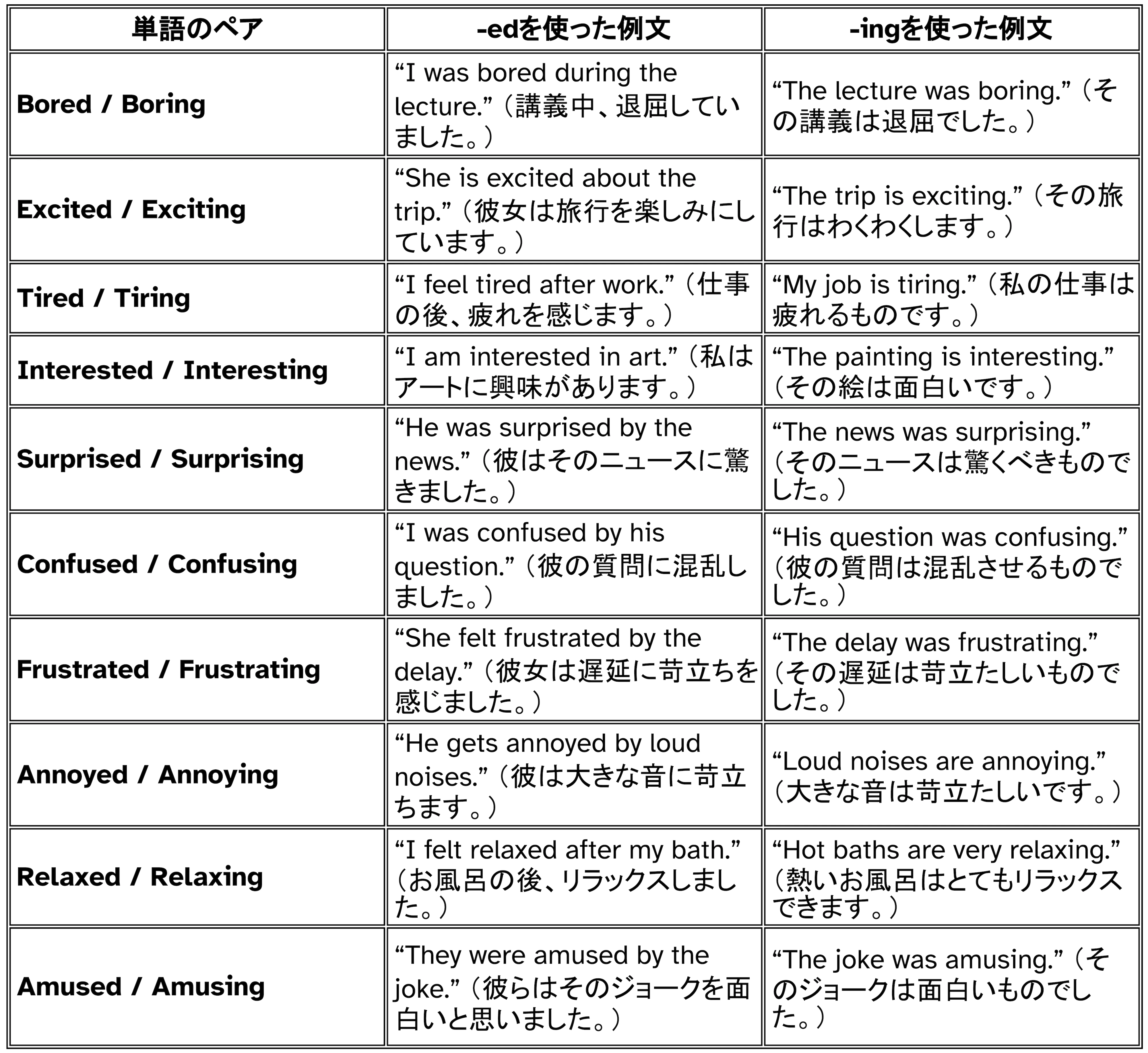
3. 文法のコツ: どう判断するか?
覚えやすいシンプルなコツがあります:
•-ed: 誰かの感情を表します。
•-ing: 感情を引き起こすものを表します。
例:
•映画が退屈なら、あなたは「bored」と感じます。
•テストが混乱させるものであれば、あなたは「confused」と感じます。
4. 練習問題
以下の練習問題で理解をテストしてみましょう。答えを書いて、下の解答と照らし合わせてください。
空欄を埋めてください:
1.The book was so ________ (bore) that I stopped reading it.
2.He felt ________ (excite) when he saw his favourite actor.
3.The instructions were ________ (confuse), so I had to ask for help.
4.She is ________ (interest) in learning English.
5.Loud noises are very ________ (annoy).
文を照らし合わせましょう:
A: “The story is interesting.”
B: “I’m interested in the story.”
どちらが「-ed」を使い、どちらが「-ing」を使っているか?
解答:
1.Boring
2.Excited
3.Confusing
4.Interested
5.Annoying
•Aは「-ing」を使っています。
•Bは「-ed」を使っています。
5. よくある間違いを避けるには
上級者でもこれらの単語を間違えることがあります。以下はよくある誤りです:
•感情を表すのに「-ing」を使う:
誤: “I feel tiring.”
正: “I feel tired.”
•感情を引き起こすものを表すのに「-ed」を使う:
誤: “The game was excited.”
正: “The game was exciting.”
6. 実生活での応用
これらの形容詞を練習する方法をご紹介します:
1.文を書く: 上記のリストからペアを使い、自分の文を作ってみてください。
例: “I was confused by the map, but the map itself was confusing.”
2.会話を観察する: ネイティブスピーカーが「-ed」や「-ing」をどのように使っているか聞いてみましょう。学んだパターンを強化できます。
3.感情と原因を考える: 何かを説明する際に、自分の感情について話しているのか(-ed)、感情を引き起こすものについて話しているのか(-ing)を考えてください。
7. 結論
「-ed」と「-ing」の単語をマスターするためには、文が誰または何に焦点を当てているかを理解することが重要です。これらの単語を正しく使う練習をしていれば、自然に使えるようになります!
少し努力すれば、よくある間違いを避けられ、流暢さも向上するでしょう。
10 English Words That Change Meaning When You Add -ed or -ing
Some English words can completely change meaning depending on whether you use the -ed or -ing form. This subtle difference often leads to confusion, but don’t worry—we’ll clear up these differences and give you examples to help you understand. If you’re learning English as a Japanese speaker, this might be particularly challenging because similar patterns don’t exist in Japanese. Let’s dive into this topic and make these words much easier to use!
1. What Are -ed and -ing Forms?
Before we explore specific examples, let’s look at the basics:
- -ed: Usually used for past tense or past participles. When used as adjectives, they describe how someone feels.
- Example: “I was bored.”
- -ing: Used for present participles (continuous tenses) or to describe something that causes a feeling.
- Example: “The movie was boring.”
Think of it this way:
- If it describes how you feel, use -ed.
- If it describes what causes the feeling, use -ing.
2. 10 Common Examples
Here are ten pairs of words where the meaning changes dramatically based on whether you use -ed or -ing. Pay attention to the examples for clarity.
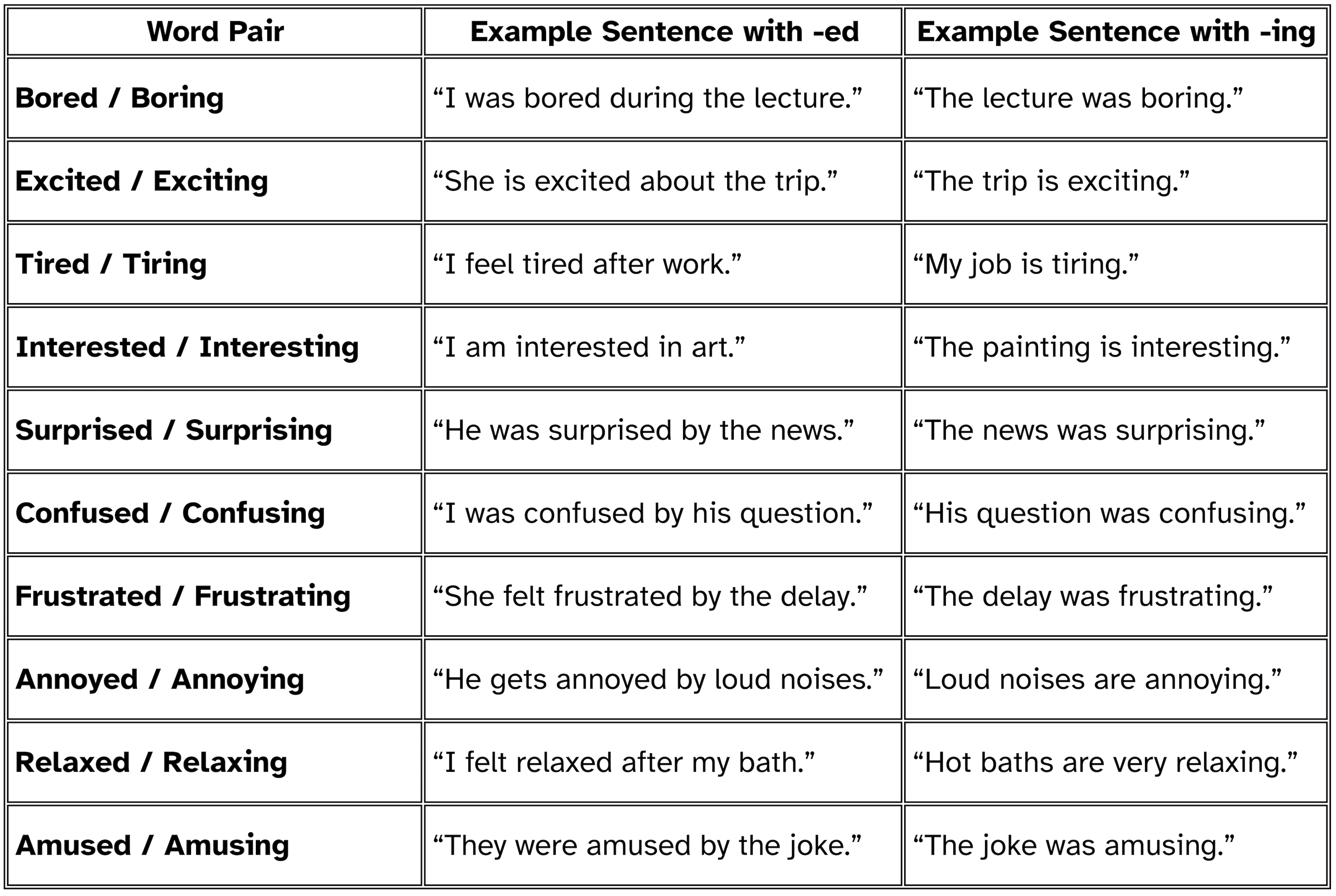
3. Grammar Tip: How to Decide?
Here’s a simple tip to help you remember:
- -ed describes how someone feels.
- -ing describes what causes the feeling.
For example:
- If the movie is boring, you feel bored.
- If the test is confusing, you feel confused.
4. Practice Exercises
Let’s practise with a few exercises to test your understanding. Write your answers and check them below.
Fill in the blanks:
- The book was so ________ (bore) that I stopped reading it.
- He felt ________ (excite) when he saw his favourite actor.
- The instructions were ________ (confuse), so I had to ask for help.
- She is ________ (interest) in learning English.
- Loud noises are very ________ (annoy).
Match the sentences:
- Sentence A: “The story is interesting.”
- Sentence B: “I’m interested in the story.”
- Which sentence uses -ed? Which uses -ing?
Answers:
- Boring
- Excited
- Confusing
- Interested
- Annoying
- Sentence A uses -ing.
- Sentence B uses -ed.
5. Common Mistakes to Avoid
Even advanced learners sometimes make mistakes with these words. Here are a few common errors:
- Using -ing to describe feelings:
- Incorrect: “I feel tiring.”
- Correct: “I feel tired.”
- Using -ed to describe what causes the feeling:
- Incorrect: “The game was excited.”
- Correct: “The game was exciting.”
By understanding these differences, you can avoid these errors in your writing and speech.
6. Real-Life Application
Want to practise using these adjectives? Here are some simple ways:
- Write sentences: Try creating your own sentences using pairs from the list above. For example, “I was confused by the map, but the map itself was confusing.”
- Observe in conversation: Listen to how native speakers use -ed and -ing adjectives. You’ll notice patterns that reinforce what you’ve learned.
- Think about feelings and causes: When describing something, ask yourself: Am I talking about how I feel (-ed) or what causes the feeling (-ing)?
7. Conclusion
Mastering -ed and -ing words is all about understanding who or what the sentence focuses on. Practice using these words correctly, and soon, it will feel natural!
With a little effort, you’ll avoid common mistakes and improve your fluency.
Deep Dive

In this Nexus Deep Dive, we are talking about “~ed” and “~ing” adjectives and how to use them correctly.
今どれくらい理解できていますか?Nex-Botクイズを
受けて、どれだけ学んだかを確認しましょう!
ログインユーザーは、クイズを完了することで週に最大6ネクサス・パワー ザップを獲得できます!
